Wireless Chargers Ranked by Actual Performance
Wireless charger marketing is generous fiction. Here are the ones that actually charge your phone quickly, tested under real conditions.
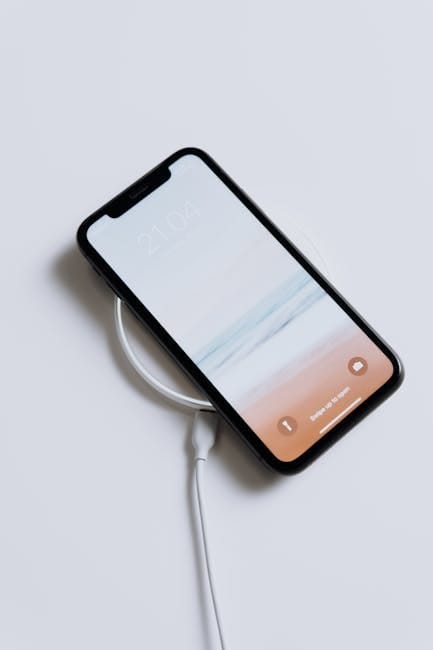
Wireless charger marketing is a lot like power bank marketing — the numbers on the box don't match the numbers that reach your device. A "15W" wireless charger often delivers 7W to your iPhone. A "30W" wireless charger for specific Android phones might not work at all on your iPhone. The wattage listed is usually the maximum theoretical output under ideal conditions to a specific device under a specific firmware version.
Here's the actually useful guide: which wireless chargers deliver real performance, which ones are overpriced, and where wireless charging is worth using versus where wired is still the right answer.
The basics of wireless charging speed
Wireless charging is always slower than wired. A 20W fast wired charger delivers 20W of energy to your phone's battery. A 15W wireless charger delivers 8-12W of energy after electromagnetic losses. The wireless convenience costs you time.
For an iPhone:
- 5W Qi standard: fully charges in 3 hours (from 20%).
- 7.5W (iPhone's older fast wireless): 1.5-2 hours.
- 15W MagSafe: 1-1.5 hours.
- 20W+ USB-C wired: 30-45 minutes.
For Android phones, the ceiling is higher (some support 30-50W wireless), but the practical realities remain: wireless is slower, hotter, and less efficient.
The wireless chargers worth buying
Apple MagSafe Charger — $39
The official answer for iPhone users. 15W fast wireless charging to iPhone 12 and later models. Magnetic alignment ensures the coil is positioned correctly for maximum efficiency.
Price is reasonable for Apple first-party. Works reliably. Simple, clean design.
Caveat: needs a 20W+ USB-C power adapter to deliver the full 15W. The MagSafe Charger doesn't include the adapter — you need your own.
Anker 633 MagGo (stand) — $79
Magnetic 15W charger in a stand form factor. Holds your phone upright while charging — useful for video calls, watching content, or monitoring notifications.
Works with iPhone 12+ for full MagSafe speeds. Works with older iPhones and Android phones at 5W Qi standard.
The stand form factor is genuinely nice for desk use.
Belkin BoostCharge Pro 3-in-1 (MagSafe) — $149
Covered in the home office gear article. Charges iPhone (MagSafe), AirPods, and Apple Watch simultaneously. Premium build quality.
Worth the price specifically for bedside use where one device charges all three Apple devices overnight.
Mophie 3-in-1 Travel Charger — $119
The travel version of a 3-in-1. Foldable design for packing. Slightly less premium than the Belkin but 30% smaller.
For frequent travelers who use an iPhone, AirPods, and Apple Watch, this is the right travel charger.
Ikea Sjömärke (cable-free wireless charger built into furniture) — $49
Stick this under a wooden desk (up to 8mm thick) and your phone charges when placed on top. Wire management becomes invisible.
Novelty for most, but for specific interior design needs, it's the only game in town. Ikea also sells side tables with built-in wireless charging.
What to avoid
Avoid any wireless charger under $20. The coil positioning is imprecise, meaning your phone may or may not charge fast depending on exactly how you place it. The quality control on cheap inductive coils is also poor.
Avoid "50W fast wireless" chargers without verifying your phone supports that speed. The Anker 30W and 40W wireless chargers for Samsung phones deliver full speed only on Samsung phones with specific fast wireless charging. On an iPhone, they're still limited to 15W MagSafe.
Avoid wireless chargers without MagSafe magnetic alignment if you have an iPhone. Non-magnetic Qi pads let you align poorly and charge slowly. The magnet ensures optimal coil positioning.
Avoid generic "wireless charger stands" with visible no-name branding. The specifications are usually inflated, the build quality is poor, and they tend to overheat.
The heat problem
Wireless charging generates heat. More heat than wired. The heat is absorbed by your phone's battery, which accelerates battery degradation.
A phone that wireless-charges for a year loses more battery capacity than the same phone wired-charged for a year. The difference is measurable.
For daily overnight charging, wired is better for battery longevity. For occasional convenience (desk charging during meetings), wireless is fine.
The car mount question
Magnetic wireless charging in the car is genuinely useful. The phone attaches to the mount, charges automatically, and works as a navigation display.
Picks:
- Belkin Car Vent Mount Pro with MagSafe — $49.
- Anker 613 Magnetic Wireless Car Charger — $39.
- Apple-licensed MagSafe Car Mount — varies.
All deliver 7.5-15W wireless charging via MagSafe. Installation takes 5 minutes.
The overnight charging debate
Leaving your phone on a wireless charger overnight is less damaging than it was 5 years ago. Modern phones throttle charging at 80%+ and trickle-charge the last 20%. Smart charging features (iOS's "Optimized Battery Charging") wait until morning to reach 100%.
Still, wired overnight charging is slightly better for battery longevity than wireless overnight charging. The heat difference matters.
For optimal battery life: wired overnight, wireless during the day for top-ups.
For convenience: wireless throughout, accept 5-8% faster battery degradation over 3 years.
Most people fall somewhere in between. The choice is yours based on how long you plan to keep the phone.
Android-specific considerations
Samsung Galaxy phones support 15W wireless charging via Samsung's fast wireless 2.0 standard. Different from Qi standard. Compatible chargers require specifically Samsung-supporting hardware.
Google Pixel phones support 23W wireless charging via the Pixel Stand (2nd gen) specifically. Other wireless chargers on Pixels are limited to 15W.
OnePlus and Xiaomi support proprietary high-speed wireless (50W+) only with their brand-matched chargers.
For Android users, check the spec sheet for your specific phone. Generic "fast wireless" chargers often only deliver the lowest common denominator (5W Qi) on Android.
Wireless charging for other devices
AirPods
AirPods Pro 2 and later have MagSafe charging cases. Align the case with a MagSafe charger and it charges. Works well in 3-in-1 chargers.
Apple Watch
Apple Watch charging is proprietary — doesn't work with regular Qi or MagSafe chargers. You need a dedicated Apple Watch charging puck or a charger that includes one.
Wireless earbuds from Samsung, Google, Sony
Most have Qi-compatible cases. Place on any Qi charger to top up. Slow charging, but sufficient for earbud battery needs.
What's not coming anytime soon
True "at-a-distance" wireless charging (power through the air without direct contact) has been promised for years. It's not coming to consumer products in the next 2-3 years. The physics of efficient power transfer at distance are unsolved.
Wireless charging on your couch or desk from a room-level emitter is science fiction, not near-term product.
The honest recommendation
For iPhone users: Apple MagSafe Charger at $39 for basic use. Belkin BoostCharge Pro 3-in-1 at $149 for bedside multi-device charging.
For Android users: Brand-specific first-party charger for your phone (Samsung Fast Charger, Pixel Stand). Avoid generic Qi pads if you want full charging speed.
For travel: Mophie 3-in-1 Travel Charger at $119 covers all Apple devices in a compact foldable package.
For the car: Belkin Vent Mount Pro with MagSafe at $49.
One principle
Wireless charging is a convenience technology. It's never faster than wired. It's never more efficient. The reasons to use it are ergonomic — pick-up-and-set-down simplicity, the elimination of cable wear, the cleanness of charging pads on a desk.
For scenarios where convenience matters more than speed (desk top-ups, car mount, bedside overnight), wireless is great. For scenarios where you need the phone to charge fast (morning rush, car trip prep), plug in the cable.
Most people don't need more than one wireless charger. Get a decent MagSafe or Samsung fast charger for your desk, and keep a wired charger elsewhere. Anything more is accessory overhead that doesn't improve your life proportionally.
The wireless charging market has been confused for years. Marketing numbers don't match real output. Standards proliferate without clear consumer benefit. Buy from known brands, skip the rest, and don't let wireless charger shopping take more than 30 minutes of your life.