The Bose QuietComfort Ultra After One Year: Still the Best?
I've worn the Bose QuietComfort Ultra for a full year. Here's whether it's still the right choice.
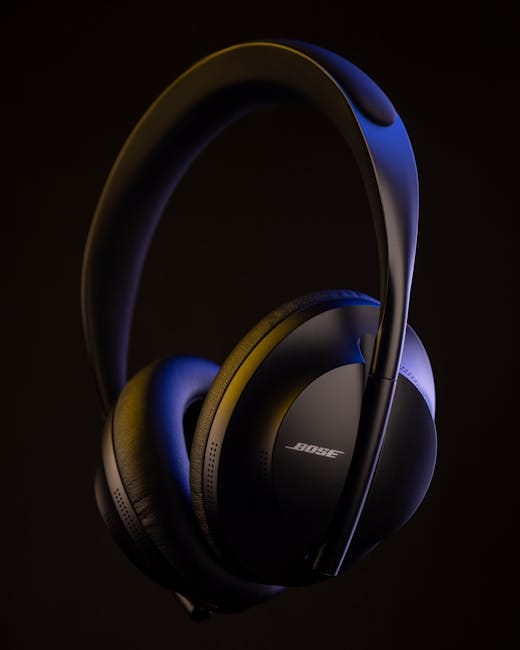
The Bose QuietComfort Ultra launched in late 2023. I bought them in early 2024 after years with the original Bose QuietComfort 45. A year of daily use later, I have a perspective most reviews miss.
The headline: the Ultra is still the best Bose headphone ever made, but it's not necessarily the best ANC headphone overall. Let me walk through the specifics.
What's held up well
Comfort is still unmatched
Twelve months of 4-6 hour daily wear, and the ear cushions still feel exactly like they did day one. No hot spots. No pressure points. No fatigue after long sessions.
The comfort is why I still reach for the Ultra over other headphones. The Sony WH-1000XM5 is slightly better sonically; the AirPods Max has better spatial audio. Neither is as comfortable for 5+ hour sessions as the Bose.
ANC effectiveness is still class-leading
For consistent noise (HVAC, air travel, office hum), Bose's ANC has no peer. A year of use hasn't degraded the algorithm or microphones. Engineering noise still drops dramatically the moment I put them on.
Build quality
Visible wear after a year of daily use: minimal. The exterior plastic has some small scuffs. The ear cushion stitching is intact. The headband padding hasn't flattened.
Bose's build quality standards show up over time. Products that look the same as day one after a year of use are the products worth recommending.
What's become more noticeable
The sound quality gap vs competitors
On critical listening, the Sony WH-1000XM5 is better. More detail in the mids, more accurate bass, better soundstage. The Bose's sound signature is tuned for everyday listening rather than audiophile appreciation.
For podcasts, audiobooks, casual music, and video calls: Bose sounds fine. For detailed listening to acoustic or jazz recordings, the Sony edges ahead.
A year of A/B comparisons has made me acknowledge this more than launch-day reviews suggested.
The ANC penalty on music quality
With ANC enabled, the Bose produces more audible artifacts in music than the Sony does. A subtle compression effect. Transients feel slightly dulled.
This is less obvious on podcasts and voice content. More noticeable on recordings with dynamic range.
Solution: turn ANC off when listening in quiet environments. The Bose sound improves noticeably with ANC disabled.
Bluetooth range has been variable
Generally fine — 20-30 feet of reliable connection. Occasional drops when my phone is in a pocket while the headphones are on my head and I move through a doorway. This is common for Bluetooth headphones, but I've noticed it happens more with Bose Ultra than with AirPods Max.
The features I actually use
Multipoint pairing (daily)
Connected to my MacBook and my iPhone simultaneously. Switch between them seamlessly depending on which is active. This was an early Bose addition; works reliably now.
Touch gestures (rarely)
The Ultra has touch gestures on the right earcup. I rarely use them. Physical buttons on the left are more reliable. Skip through the touch sensitivity settings and use primary physical buttons.
Immersive Audio (never)
Bose markets "Immersive Audio" as a feature. It creates a virtual surround effect. I've tried it. It sounds artificial. Music in normal stereo is better.
Aware Mode (useful occasionally)
Transparency mode that lets you hear surroundings while listening. Useful for walking in cities where you need to hear traffic. Worse than AirPods Max transparency for naturalness, but functional.
What I'd change
Carrying case is too large
The Ultra's case is substantial. Doesn't fit well in a small backpack. For travelers, a more compact case would be welcome.
Price is still the biggest barrier
$449 is expensive. The value is there for heavy users. For casual use, the Bose QC 45 (the previous generation, still available at $329) delivers most of the benefit at lower cost.
Voice call microphone quality
Adequate but not exceptional. AirPods Max has better microphone quality in noisy environments. For occasional calls, Bose is fine. For daily calls as a primary microphone, a dedicated setup is better.
The one-year durability report
Battery life at 12 months: identical to day one (around 24 hours with ANC on). No degradation yet.
Ear cushions: showing minor wear, not enough to replace yet. Bose sells replacements for $40 when needed.
Headband padding: intact. No compression.
Buttons and touch sensors: work reliably.
Cable jack (when used wired): fine, no wobble.
Expected lifespan based on current wear: 3-4 years of primary use before ear cushion replacement. 5-7 years of total usable life.
The comparison after a year
vs Sony WH-1000XM5
Sony: better sound quality, especially with detailed music. Worse comfort for long sessions. Better for sound-quality-focused users.
Bose: better comfort. Slightly better ANC for consistent noise. Better for all-day use.
If I could only own one: Bose for general use, Sony for music-focused sessions. Ideally, both.
vs AirPods Max
AirPods Max: best-in-class transparency mode, seamless Apple device switching. Heavier, less comfortable for long sessions.
Bose: lighter, more comfortable, better for non-Apple users.
AirPods Max wins for deeply Apple-integrated users who want all-Apple experience. Bose wins for users who prioritize pure comfort.
vs Focal Bathys
Focal: better sound quality (closer to audiophile performance). Heavier, less portable, less comfortable.
Bose: better for daily use. Focal for home listening sessions.
Different tools. Focal for appreciating music; Bose for living with music throughout your day.
Who the Bose QC Ultra is actually for
Heavy daily headphone users. Office workers who wear them 5-8 hours a day. Frequent travelers. Remote workers on many video calls.
For these users, the comfort advantage of Bose over Sony is worth the smaller sound quality compromise. You're optimizing for "all day wear" over "best audiophile experience."
For occasional users (a few hours a week), any of the flagship ANC headphones works. Bose's comfort benefit matters less in short sessions.
Would I buy them again?
Yes, for my use case. I wear headphones 4-6 hours daily. Comfort matters. ANC for commuting matters. The Bose delivers.
For a different use case — someone who wanted pure music quality and didn't wear them for long sessions — I'd recommend Sony WH-1000XM5.
For someone on a budget, the Sony WH-1000XM4 at $279 offers 80% of the flagship experience. Don't dismiss the step-down option.
The long-term verdict
The Bose QuietComfort Ultra has held up as my daily driver for a year. Comfort remained. ANC remained. Battery life remained.
The specific weakness — sound quality against Sony's flagship — is a real trade-off. For the most sound-sensitive users, it matters. For most office users, it doesn't.
If I lost the Bose tomorrow, I'd buy another pair. The $449 seemed expensive on day one. A year later, with daily use factored in, it's about $1.23 per day of use. Reasonable for the best comfort in the category.
The ANC headphone category has matured. Apple, Sony, and Bose all deliver flagship experiences. Bose wins specifically on comfort. Sony wins on sound. Apple wins on Apple ecosystem. Each is the best in a specific dimension. None is wrong; pick based on which dimension you value most.