USB-C Chargers and Power Banks in 2026: Why the Wattage on the Box Lies
The wattage printed on a charger box describes a best-case scenario you'll rarely hit — here's what the number actually means, which GaN chargers are worth buying in 2026, and the airline rule that catches out even careful travellers.
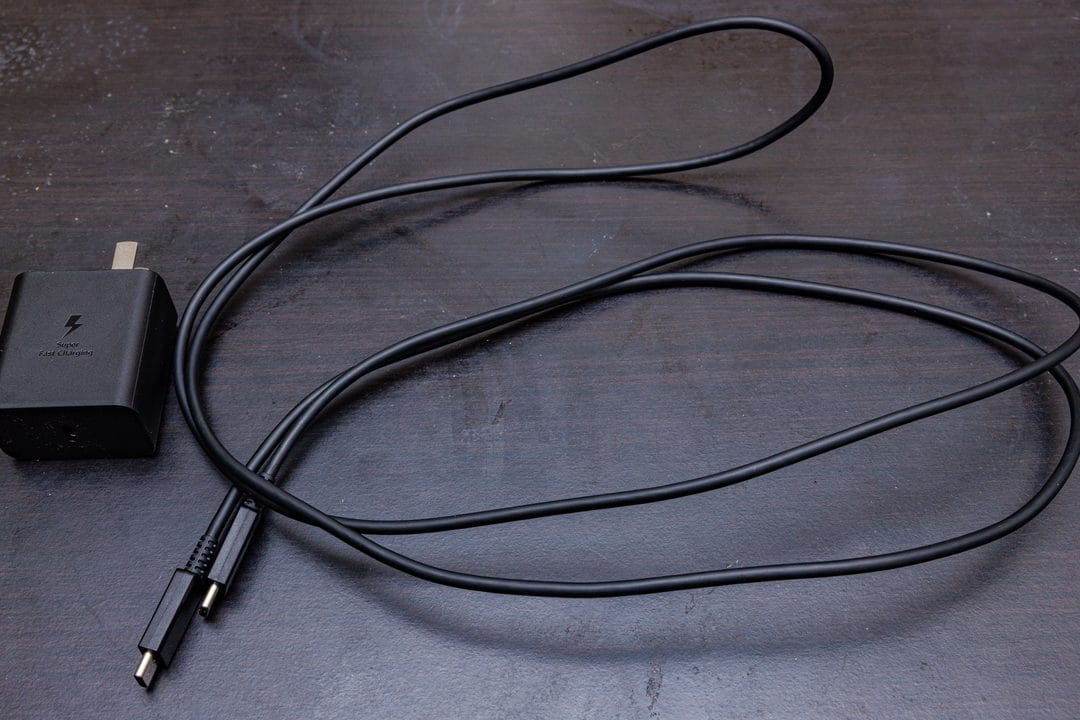
Somewhere in the last two years, the number "100W" stopped meaning much. You buy a charger with 100W stamped across the box, plug in your phone next to a laptop overnight, and by morning neither device is actually full. Nothing about the charger is broken — you've just run into a piece of arithmetic nobody printed on the packaging.
Why the Number on the Box Isn't the Number You Get
The wattage printed on a GaN charger describes the total ceiling the internal circuitry can produce, not a guarantee that any single port on the device will hit that figure. Anker's own spec sheet for its Prime 100W Smart Display charger makes this explicit: plug in one device on either of the two USB-C ports and you get the full 100W, but connect a second device to the other port and the charger starts splitting its budget between them, typically dropping each port to somewhere around 65W and 30W depending on what gets negotiated. A third device on the USB-A port takes an even smaller slice. This isn't a defect specific to Anker — every multi-port GaN charger on the market, from Ugreen's Nexode range to Baseus's GaN5 Pro line, works the same way, because the transistors inside only generate so much total power and the firmware has to divide it somehow. What actually reaches your phone also depends on the cable (a cheap USB-A-to-Lightning lead rated at 12W will bottleneck a 100W charger into uselessness), the phone's own charging chip, and how warm the room is, since lithium cells throttle their charge rate above roughly 35°C to protect the battery. None of this is marketing spin so much as basic electrical accounting that retailers have no incentive to explain on the box.
The box isn't lying — it's just describing a scenario you'll hit once a year, if that.
Gallium Nitride, Explained Without the Marketing Fluff
Gallium nitride matters because it lets a charger switch electrical current far faster than the old silicon transistors could, which means far less energy gets wasted as heat during the conversion from mains voltage down to the 5–20V a phone or laptop actually wants. Less wasted heat means a smaller heatsink, which is the entire reason a modern charger the size of a large stamp can now do what used to require something the size of a house brick. Anker's Prime 67W GaN Wall Charger — three ports, £28.99 at the time of writing, down from £34.99 — is a fair baseline for anyone who just needs to charge a phone and a pair of earbuds overnight. Baseus undercuts it further with the EnerFill FE11, a 100W two-USB-C-plus-one-USB-A charger currently £26.39 on the brand's UK store, and the spec sheet reads almost identically to chargers costing twice as much. Buy on the wattage and port count you actually need, not on the brand name printed across the front — GaN commoditised this category faster than most shoppers have noticed.
The EU Just Made Laptop Chargers Universal — Britain Hasn't, Officially
From 28 April 2026, the EU's Common Charger Directive extended to laptops, meaning any new laptop placed on the market across the 27 member states — plus Norway, Iceland and Liechtenstein under the EEA agreement — must charge over USB-C, support USB Power Delivery whenever it draws more than 15W, and give buyers the option to purchase the machine without a charger in the box at all. It closes a loop that already covered phones, tablets, cameras, headphones, handheld consoles and e-readers from December 2024 onwards, and Brussels estimates it will cut roughly 11,000 tonnes of charger e-waste a year across the bloc. Here's the part most British shoppers get wrong: this law does not apply in the UK. Britain sits outside the EEA along with the EU, and while the Office for Product Safety and Standards ran a public consultation in late 2024 on adopting an equivalent USB-C mandate, that consultation closed in December 2024 without turning into enacted legislation. So, strictly speaking, a UK retailer could still sell you a laptop with a proprietary barrel-pin charger tomorrow and break no law by doing it. In practice almost none do, because no manufacturer builds a separate MacBook Pro or Dell XPS for the British market — the unit sitting on a shelf in a Currys in Manchester is the identical part number sold in a MediaMarkt in Munich, built to the stricter EU spec because splitting production lines costs more than complying everywhere. The protection is real; it's just arriving in the UK as a side effect of EU manufacturing economics rather than as a UK law.
Three Chargers Worth Buying Right Now
Stop reading spec sheets and buy one of these three, depending on what you're actually charging:
- One phone, most nights: Anker's Prime 67W GaN Wall Charger (£28.99) — plenty of headroom for a Galaxy S25 Ultra or an iPhone Pro Max plus a pair of headphones on the second port.
- A laptop and a phone off one wall socket: the Baseus EnerFill FE11 100W (£26.39) does the job for nearly a third less than the equivalent Anker, and there's no meaningful performance gap to justify the difference.
- If four devices land on your desk every evening — phone, watch, tablet, laptop — Anker's 250W six-port GaNPrime charger (£119, down from £149) with its live digital wattage display is worth the outlay, though most men living alone are paying for capacity they'll rarely fill.
Skip anything under 65W in 2026 — it's a false economy on a phone that already supports 45W charging out of the box.
The Airline Rule Nobody Reads Until They're at Security
Power bank capacity is sold in milliamp-hours, but the rule that actually governs whether you can board a flight with one is written in watt-hours, and the conversion catches out more travellers than any other line in an airline's baggage policy. The formula is capacity in mAh multiplied by 3.7 (the nominal voltage of a lithium cell), divided by 1,000 — so a 27,000mAh pack sits right at 99.9Wh, just under the universal threshold. Under 100Wh, a power bank travels in carry-on luggage with no paperwork and no quantity limit; between 100Wh and 160Wh, most airlines will carry it but only with prior approval and a hard cap of two units per passenger; above 160Wh, it doesn't fly at all, checked or carry-on. From March 2026, ICAO tightened the global baseline further after a power bank stored in an overhead bin was identified as the cause of the fire that destroyed an Air Busan Airbus A321 on the ground at Gimhae Airport in January 2025, injuring twenty-seven passengers during the evacuation. Singapore Airlines, the Lufthansa Group and several Asian carriers now also require power banks to stay within reach in the cabin rather than in the overhead locker, and ban recharging them mid-flight entirely.
For a weekend away, buy a 20,000mAh pack (roughly 74Wh) rather than maxing out at 25,000mAh or more — Ugreen's Nexode 20,000mAh 100W (£44.97, down from £59.99) covers a full phone charge twice over plus a laptop top-up, comfortably clear of the 100Wh line and any airline paperwork.
What About Charging a Laptop From a Power Bank?
Laptop-capable power banks are a genuinely different category — Ugreen's Nexode Pro 25,000mAh, at £89.99, pushes a combined 200W across its ports and can put real, usable charge into a MacBook Pro or a Dell XPS on a train with no socket in sight. Run the same maths as above and 25,000mAh works out to roughly 92.5Wh, still under the 100Wh ceiling, but close enough that pairing it with a second phone power bank in the same bag will push you over the two-unit-per-passenger limit most airlines now enforce. Buy one laptop power bank, not two, if you're flying with it — and check whether your destination has imposed a lower Wh ceiling than the 100/160 split most carriers default to, since a handful of Asian airlines have already trialled stricter limits. It's the one gadget on this list worth reading the manual for before you pack it, not after.