2026 Smartwatch Buyer's Guide for Men: Why Battery Life Beats the App Store Now
Battery life beats app-store gimmicks every time. Here's how Apple, Samsung, Garmin, COROS and Amazfit smartwatches actually compare for men who don't want to charge nightly.
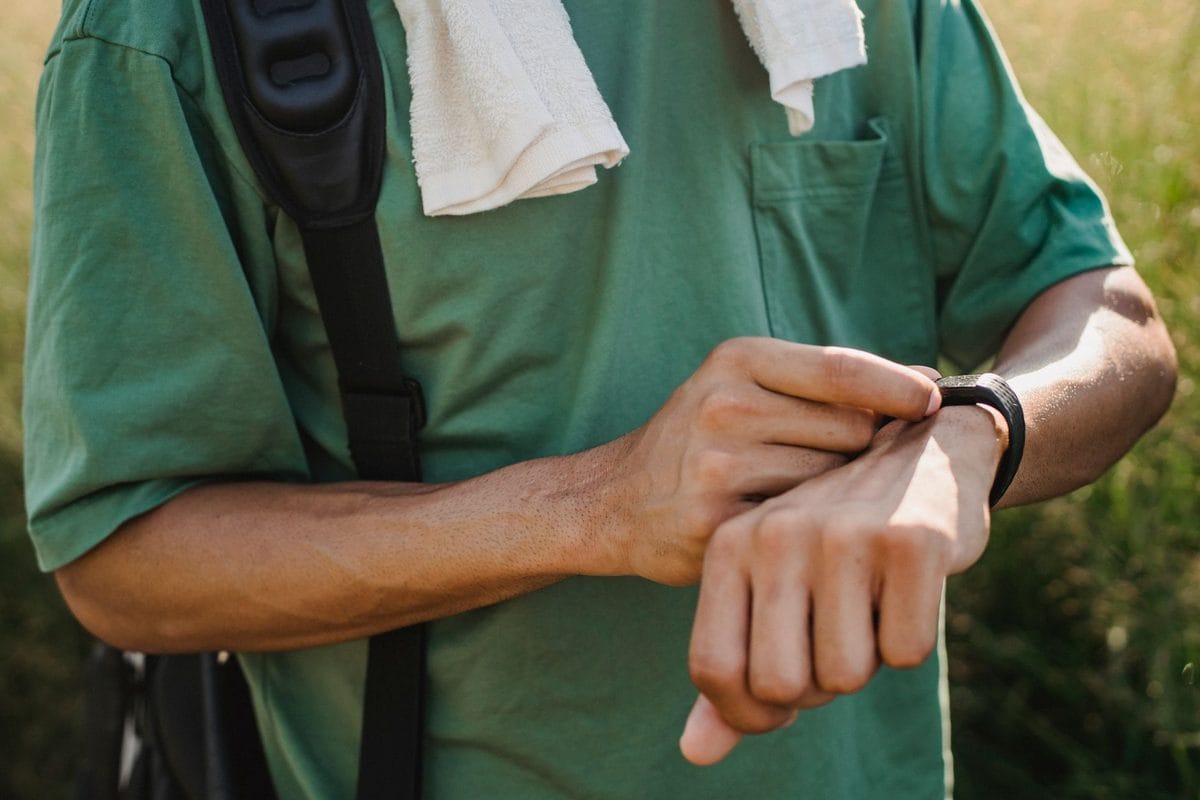
You plug your phone in every night without thinking about it. Then you glance at your wrist on day two of a long weekend and the smartwatch that promised to track your sleep, your heart rate and your Strava segments is a black rectangle. That's the moment most men actually make their next smartwatch decision — not in a spec sheet comparison, but standing in a hotel bathroom at 6am wondering why the thing that was supposed to run your life just quit on you.
The App Store Trap Nobody Warns You About
For years, the smartwatch pitch was about apps. Apple sold the Watch on its App Store the way it sold the iPhone — a screen you'd fill with third-party tools, a platform you'd extend. Samsung followed with Wear OS and its own Galaxy Store. The marketing still leans that way: check your Slack, order a coffee, control your Sonos, all from your wrist. Most of that turned out to be theatre. Ask anyone who's owned an Apple Watch for two years which third-party apps they open weekly, and the honest answer is usually "none, I use the built-in fitness stuff and that's it."
Meanwhile the thing that actually decides whether you keep wearing the watch past month three is whether it survives a weekend camping trip, a double shift, or just forgetting the charger on a work trip. Garmin figured this out a decade ago and built an entire business around it. Apple and Samsung are only now, grudgingly, following — the Apple Watch Ultra 2 exists specifically because enough buyers complained that the standard Watch couldn't get through 36 hours, let alone a full weekend off-grid.
What Actually Kills a Smartwatch's Battery
Three things drain a smartwatch faster than the spec sheet admits: an always-on colour display, continuous GPS tracking, and background app refresh syncing notifications every few minutes. Turn off always-on display on a Galaxy Watch 7 and you can roughly double its runtime — Samsung just doesn't put that number on the box because it wants the watch to look good on a shop shelf. The same trick works on a Pixel Watch 3, which is rated for 24 hours with always-on active and closer to 36 with it disabled.
This is the trade-off nobody explains at the point of sale: the crisp, bright, colour touchscreen that makes a smartwatch feel premium is also the single biggest reason it needs a nightly charge. Garmin's Instinct and Fenix lines use a reflective MIP display that's dimmer and less vivid but sips power instead of gulping it — that's why a Fenix 8 in smartwatch mode lasts up to 16 days rather than one and a half.
The Everyday Contenders — Apple, Samsung, Google
If you're inside the Apple ecosystem — iPhone, Mac, AirPods — there's genuinely no argument here: get the Apple Watch. The integration with Messages, Apple Pay and Find My is deep enough that switching away costs you real convenience, not just app familiarity. The Series 10 (from £399) is the sensible pick for most men, and the Ultra 2 (£799) only earns its price if you actually dive, run ultras, or need the extra brightness outdoors. Battery life on the standard Series line still tops out around 18 hours, which means charging is a daily habit whether you like it or not. Skip the cellular model unless you genuinely run without your phone, because the connectivity premium of roughly £100 buys you very little most men will ever use. And if you're buying your first Apple Watch purely for the fitness tracking, know that a £99 Fitbit Charge will get you 90% of the same data with a battery that lasts a week rather than a day.
Samsung's Galaxy Watch Ultra (£649) is the closer Android answer to the Apple Ultra — titanium case, 100-metre water resistance, and roughly 100 hours in power-saving mode against the standard Galaxy Watch 7's 40-ish hours. Google's Pixel Watch 3 (from £349) is the most polished Wear OS experience if you want Fitbit's coaching data baked into the dial. But it's also the one I'd steer you away from if all-day-and-night battery matters more than software polish, because its 24-hour rating with always-on display is the shortest runtime of the three.
When Rugged Beats Smart — Garmin, COROS, Polar
Here's the part that surprises men who've only ever owned an Apple Watch: give up the App Store entirely and battery anxiety disappears. Garmin's Instinct 3 (£349) runs for weeks, not hours, because it isn't trying to be a phone on your wrist — no third-party apps to speak of, no colour-saturated tiles, just GPS, heart rate, and a display you can read in direct sun. COROS pushes this further; the Vertix 2S is rated for up to 60 days of GPS tracking, a figure that sounds implausible until you remember it isn't running notifications, streaming music, or refreshing a weather widget every ten minutes.
Polar's Vantage V3 (£500) sits in between — proper training metrics, real recovery tracking, and around 140 hours of continuous GPS use, which in practice means a serious runner training for a marathon can go most of a training block without plugging in daily. None of these watches will ever let you reply to a text message properly, and that's precisely the point. You're not buying a smaller phone. You're buying an instrument that happens to also tell the time.
The Long-Life Outliers — Amazfit and Withings
Budget doesn't have to mean short battery life, and this is where Amazfit quietly embarrasses the big three. The Amazfit Bip 6 (around £70) claims up to 14 days on a charge with typical use, and even with GPS and always-on display switched on it still comfortably beats an Apple Watch. It won't run third-party apps worth mentioning, the app ecosystem is thin, and the software occasionally feels a generation behind. Amazfit's Balance sits a rung up at around £180, adding an AMOLED screen and on-watch AI health coaching while still lasting the better part of a fortnight. None of this is going to impress anyone at the pub who's used to swiping through Apple's watch faces. But if your priority is "I want to stop thinking about charging," that trade-off is an easy one to make, and £70 buys you a watch that will still be running on day nine of a festival when your mate's Apple Watch died on day one.
Withings takes a different route entirely: hybrid analogue-digital watches like the ScanWatch 2 (£300) keep real hands and a real dial, hide a small display in a subdial, and run for roughly 30 days between charges because there's no always-on colour panel to feed. It also packs an ECG and SpO2 sensor that Apple gates behind a much pricier watch. The catch — because there's always a catch — is that you lose the fast glanceable notifications and the smooth animations that make an Apple Watch or Galaxy Watch feel modern. You're choosing longevity over responsiveness, and that's a genuinely different watch category, not a lesser version of the same thing.
Matching the Watch to How You Actually Live
Work out which of these you actually are before you open your wallet, because the three "everyday" watches and the three "rugged" watches solve completely different problems.
- You live and die by iMessage, Apple Pay and Find My, and you charge your phone every night anyway — get the Apple Watch Series 10 and stop overthinking it.
- Ultra-distance running, diving, or three days at a time somewhere without a plug socket calls for a Garmin Fenix 8 or a COROS Vertix 2S, both of which will comfortably outlast the trip.
- Maybe you just want a watch that tells you your resting heart rate and doesn't need daily attention, to name a few of the reasons men end up here.
- Real ECG data and a battery you check monthly rather than nightly matters more to you than glanceable notifications — that's Withings ScanWatch 2 territory, not Apple's.
Don't buy the Ultra tier of anything — Apple's Ultra 2 or Samsung's Galaxy Watch Ultra — unless you can name the specific activity that needs its extra durability or brightness. Most men buying the Ultra models are paying £300–£450 more than the standard version for a feature set built for open-water swimmers and mountain guides, then using it to check emails on the sofa.
Charging Habits Matter More Than the Spec Sheet
Battery life numbers on the box assume ideal conditions, and real use rarely matches them — cold weather alone can cut a lithium-ion battery's usable capacity by 10–20%, which is why your Garmin that promises 16 days in "smartwatch mode" might land closer to 12 on a winter hiking trip in the Highlands. Treat every manufacturer number as a ceiling, not a promise, and build a charging habit around the worst case rather than the marketing case.
The men who complain loudest about smartwatch battery life are, more often than not, the ones who bought the watch with the biggest screen and the most notifications turned on, then never opened the settings menu again. Turning off always-on display, dimming brightness one notch and disabling notifications you don't actually need can add hours back without spending another penny — most owners never bother, which says more about how these watches are sold than how they're built.