Portable Power Banks and GaN Chargers in 2026: What Actually Matters Before You Buy
Retailers sell power banks on mAh alone, which is the wrong number to chase. Here's what capacity, wattage and GaN tech actually mean for the bag you carry every day.
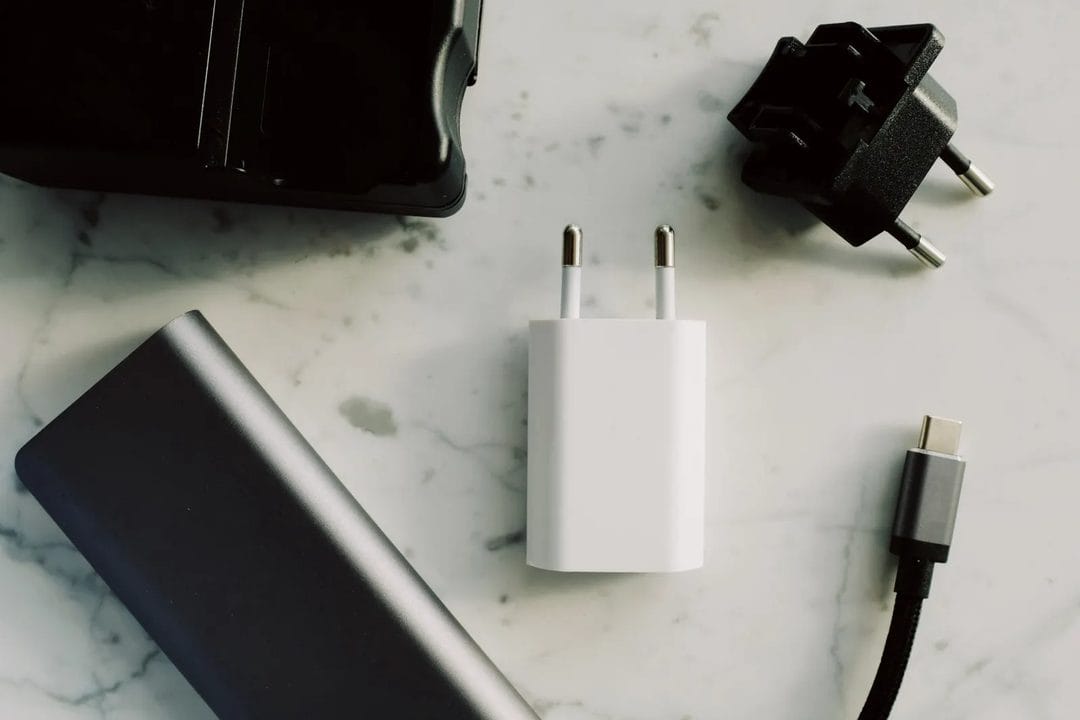
Your phone was at 91 percent when you left the house this morning. By half three it's flashing red, and the charger someone handed you off a shelf last year is rated for 5 watts — enough to keep a phone from dying overnight, nowhere near enough to actually top it up between meetings. That gap between what people think a charger does and what it actually does is where most of the money in the power bank aisle gets wasted.
The number on the box isn't the number that matters
Retailers sell power banks almost entirely on milliamp-hours, because it's the biggest number on the packaging and bigger sounds better. A 20,000mAh bank from Anker or Ugreen will set you back somewhere between £35 and £55 depending on the sale cycle, and on paper it looks like it should refill an average 4,000mAh phone battery five times over. It won't. Converting that stored charge from the bank's internal cells, through the AC-DC circuitry, into the phone's battery loses roughly a quarter of it to heat and conversion inefficiency, which means a 20,000mAh bank realistically gets you three and a half full charges, not five, and fewer still if you're also topping up a tablet off the same brick. None of that makes mAh a useless number — it's just the wrong one to lead with. What actually determines whether a power bank earns its pocket space is the output wattage stamped in much smaller print near the ports, because that's what decides whether your phone charges in twenty minutes over a coffee or sits there barely moving for the whole train journey. And a bank that only pushes out 10 watts through USB-A is a relic from 2018, no matter how many mAh the marketing headline claims — it belongs in the bin next to the chargers your old phone came bundled with.
GaN chargers are the actual 2026 upgrade
Gallium nitride chargers are the real story of the past three years, not power banks themselves. Swap the silicon transistors in a standard wall charger for gallium nitride ones and you can pack the same wattage into a housing roughly a third of the size, which is why a 65W GaN brick from Anker or Ugreen now sits comfortably in a coat pocket where the equivalent 2019-era charger needed its own compartment. Expect to pay £25 to £45 for a decent multi-port 65W unit at Currys, Argos or direct from the brand, and treat anything significantly cheaper with suspicion — the cheap ones cut corners on thermal management, and thermal management is precisely the thing that stops a fast charger from cooking your phone's battery over eighteen months of daily use.
Single-port versus multi-port bricks
A single-port 100W GaN charger dedicates its full output to one device, which matters if that device is a MacBook Pro or a gaming laptop that genuinely wants 96 watts to charge at speed. A multi-port brick splits its total wattage across however many cables are plugged in, so a "65W" three-port charger might only offer 45W down a single USB-C line once a phone and a pair of earbuds are also drawing from the other two — read the small wattage table printed on the box, because it's the only place that tells you the truth about per-port output rather than the headline total.
Power banks worth carrying, and the ones gathering dust in a drawer
Buy a 10,000mAh bank with at least one USB-C Power Delivery output rated 20W or higher — anything less is dead weight you'll charge overnight and barely notice during the day.
That recommendation is deliberately narrow, and it holds for most people rather than everyone. Most shoppers don't need a 26,800mAh brick the size of a paperback — that's a tool for someone charging a laptop on a long-haul flight, not for topping up a phone between meetings, and the extra bulk it adds to a bag rarely earns its keep. Ugreen's 10,000mAh PD bank and Anker's equivalent both sit in the £25 to £40 range, both fit in a coat pocket without announcing themselves, and both charge a modern phone from flat to roughly 50 percent in under half an hour. That's the actual benchmark worth checking before you buy — not the mAh figure on the front, and not the number of ports either, since most people only ever use one at a time. If a listing doesn't state the wattage clearly, assume the omission is deliberate and look elsewhere. Reviews that praise "fast charging" without a wattage number attached are marketing copy, not information, and they're worth ignoring on principle.
The 100Wh rule that catches people at security
Every lithium power bank carried as hand luggage is legally a battery, and batteries are regulated by watt-hours, not milliamp-hours — a distinction most shoppers never think about until airport security asks them to prove it. Under Civil Aviation Authority and IATA rules that UK airlines follow, power banks under 100Wh travel with no special permission, banks between 100Wh and 160Wh need the airline's approval in advance, and anything above 160Wh is banned from flights outright, checked luggage included. To convert: watt-hours equals the mAh figure multiplied by the voltage, divided by a thousand, so a typical 20,000mAh bank running at 3.7V works out to roughly 74Wh — comfortably under the limit, and worth writing on a sticker on the bank itself so there's no mental arithmetic at the gate.
Cutting cable clutter without buying junk
GaN chargers run cooler than the old silicon bricks — mostly. Push a 100W GaN charger at full output in a packed laptop bag on a two-hour train journey and it will still get warm enough to notice by the last stop, gallium nitride or not, because the laws of thermodynamics don't care what the transistor is made of. That's not a reason to avoid GaN, just a reason to stop expecting it to run stone cold under sustained load. The actual fix for cable clutter is simpler than another gadget purchase, and it comes down to four small swaps rather than a drawer full of new kit:
- One 65W-plus GaN wall charger replaces three or four single-purpose bricks stuffed in a drawer.
- A single 6ft braided USB-C cable rated for 100W outlasts the thin white cables that came in the box, which fray at the connector within a year of daily use.
- Skip magnetic charging cables for anything above 20W — the magnetic connection point is a bottleneck that throttles fast charging on most phones, whatever the packaging claims.
- Label the charger's wattage on the underside with a permanent marker, because after six months in a bag it's genuinely hard to tell a 30W brick from a 65W one by sight alone, and so on for every other brick that ends up in the same drawer.
Wireless charging pads: fine at a desk, wasteful in a bag
A wireless pad on a bedside table or a desk is a genuinely good habit — drop the phone down without hunting for a cable, pick it up charged. Where wireless charging falls apart is portability, because the Qi standard tops out well below wired speeds and loses roughly a third of the input power to heat during transfer, which is why a phone on a wireless pad can feel warm within minutes even at a modest 15 watts. Carrying a wireless power bank in a bag solves a problem nobody actually has: it needs the phone held flush against it to work at all, which means it can't charge in a pocket the way a cabled bank can, and the misalignment tolerance on cheaper pads is narrow enough that a slightly off-centre phone charges at a crawl or not at all.
Keep wireless charging for the nightstand and the office desk, where the phone sits still for hours and the efficiency loss doesn't matter. For anything that moves — a commute, a weekend away, a long shift on your feet — a cabled connection still wins on speed, on heat, and on not needing perfect alignment every single time.
What to actually buy
Skip the bundle deals that pair a low-wattage charger with a high-capacity power bank. The mismatch means the bank never charges itself as fast as it discharges into your phone, so it ends up permanently topping up overnight instead of sitting ready to go. Buy the charger and the bank as separate decisions, matched on wattage, and check the per-port table before the mAh figure on the box.
A 65W GaN charger and a 10,000mAh PD power bank together cost less than £70 all in, weigh under 400 grams combined, and will outlast most phones bought this year — which is a better return than most of what else sits in that bag.