Noise-Cancelling Headphones Buyer's Guide 2026: Why the Chip Matters More Than the Driver
What actually separates a great pair of noise-cancelling headphones from an overpriced one in 2026 - and why the ANC chip matters far more than the spec sheet.
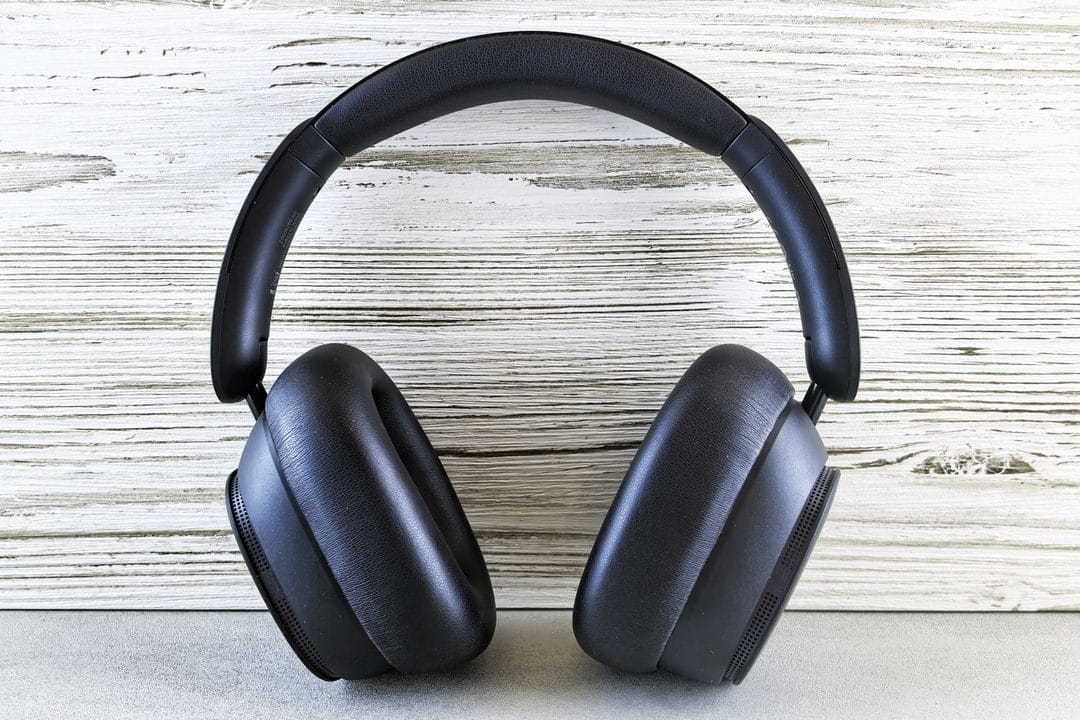
Put a $549 pair of headphones next to a $149 pair from the same product category, and most people in a blind cabin-noise test can't reliably tell which one blocks more engine rumble. That's not a knock on premium audio — it's proof that the marketing war over noise-cancelling headphones has drifted away from what your ears actually notice on a real flight or a real commute. In 2026, the gap between a genuinely great pair and a mediocre one isn't the driver size stamped on the box. It's the processing chip running underneath, the firmware tuning nobody photographs for the product page, and three or four features that never make it into a thirty-second ad.
Why the Chip Inside Matters More Than the Spec Sheet
Sony's own QN3 processor, first introduced in the WH-1000XM5 and doing even more work in the WH-1000XM6, is the reason Sony still leads most independent noise-blocking tests despite Bose's decades-long head start in the category. Bose counters with a proprietary chip tuned specifically for low-frequency rumble — engine noise, air conditioning hum, the drone of a train car — which is why frequent flyers keep buying Bose QuietComfort Ultra even when review sites score Sony higher on paper for overall isolation. Apple's H2 chip, running inside the USB-C AirPods Max, handles computational audio and head-tracked spatial sound well but still trails both rivals in raw noise reduction, a gap Apple's marketing conveniently avoids mentioning in any comparison chart. Meanwhile, the mid-range has caught up faster than premium buyers expect: Anker's Soundcore Space One Pro, built around a licensed chip rather than an in-house one, gets within a few decibels of headphones costing three times as much in cabin-noise testing, and at roughly $130 it embarrasses a chunk of the $400 tier. The chip is doing the isolating; the ear cushions are just there to stop sound leaking around the seal, and no amount of memory foam fixes a weak processor. Buy on chip reputation first, brand loyalty second — Sony and Bose earned their names by shipping good silicon for a decade, not by accident.
Adaptive ANC vs. Fixed ANC
Adaptive noise cancelling reads the environment continuously and adjusts the cancellation signal in real time; fixed ANC applies one static profile regardless of whether you're in a quiet office or standing on a windy platform. This works fine in a controlled room — until you step outside into wind, at which point uncalibrated fixed ANC can create a distinct pressure sensation around the ears, sometimes called ANC pumping, that adaptive systems are specifically built to suppress. Sony's Wind Noise Reduction and Bose's automatic environment sensing both exist because older fixed-profile headphones were genuinely unpleasant to wear on a bike commute or a dog walk. If you spend real time outdoors rather than mostly on planes and in offices, adaptive ANC isn't a nice-to-have — it's the difference between wearing the headphones and giving up on them after three cold mornings.
Multipoint Bluetooth Is No Longer Optional
Multipoint lets a single pair of headphones stay connected to two devices at once — your laptop and your phone, say — so a Slack call notification or an incoming call doesn't require you to dig into a Bluetooth menu and manually switch. Every serious 2026 release running Bluetooth 5.3 or 5.4 supports this now, including budget models from Anker and JBL, which means there's genuinely no excuse left for buying a pair that forces you to disconnect from your laptop every time your phone rings. The practical test is simple: play music from your laptop, then have someone call your phone, and see whether the headphones pause the music and route the call automatically or just sit there confused. Skip anything that fails that test in 2026 — it's a solved problem, and paying full price for unsolved multipoint is paying for last decade's engineering.
Codecs: LDAC, aptX Lossless, and the Truth About "Hi-Res Audio"
Sony's LDAC codec and Qualcomm's aptX Lossless both promise near-CD-quality streaming over Bluetooth, and both actually deliver a noticeable improvement over standard SBC on a good pair of drivers. Here's the catch nobody puts on the box: LDAC only works with Android phones and select DAPs, aptX Lossless needs a Snapdragon Sound-certified phone on the other end, and iPhones support neither — every AirPods Max and every third-party headphone paired to an iPhone streams over plain AAC, full stop. Snapdragon Sound branding shows up on phones from Samsung, Xiaomi, and OnePlus, but almost never on the headphone box itself, so plenty of Android owners never learn their own phone already supports the better codec. So an iPhone owner paying extra for a "Hi-Res Audio Wireless" sticker on the box is paying for a codec their phone will never actually negotiate a connection with, which is arguably the single most misleading claim in headphone marketing right now. If you're on Android, LDAC is worth seeking out on Sony and Sennheiser models, and it does make an audible difference on a well-mastered FLAC file through a decent pair of drivers. If you're on iPhone, ignore the Hi-Res badge entirely and judge the headphones on drivers, tuning, and ANC instead — the codec conversation simply doesn't apply to you, no matter how many times a product page mentions it.
Battery Life and Charging
Real-world battery life with ANC running has settled into a fairly narrow band: 24 to 30 hours is typical for Sony and Bose flagships, Sennheiser's Momentum 4 Gen 2 pushes past 60 hours because it undersells its own ANC strength to protect the number, and budget Anker models often claim 40-plus hours because their chips simply draw less power doing less sophisticated processing. A five-minute USB-C fast charge buying three to four hours of playback is standard across every brand worth considering in 2026 — if a pair you're looking at doesn't offer that, it's running last generation's charging circuitry regardless of what year it shipped. Don't chase the biggest number on the box. A pair that does 24 hours of excellent ANC beats a pair that does 60 hours of mediocre ANC, every time, for anyone who charges their gear overnight anyway.
Transparency Mode: The Feature You'll Actually Use More
Transparency or ambient sound modes let outside noise through deliberately — a barista calling your name, a gate agent making an announcement, a friend talking to you across a table — without you removing the headphones. This is the feature most buyers ignore during a five-minute store demo and then end up using dozens of times a day once they own the headphones, because ripping them off to hear someone gets old within a week. Apple's Adaptive Transparency on the AirPods Max, which dynamically ducks sudden loud sounds like a siren or a jackhammer while still letting speech through clearly, is genuinely the best implementation on the market right now. Bose and Sony's transparency modes are close behind and perfectly usable, but Apple's version handles the loud-sudden-noise case with less of the tinny, processed quality that gives cheaper transparency modes away.
This one's worth saying plainly: if you're choosing between two otherwise-similar pairs, pick the one with better transparency mode over the one with marginally better ANC. You'll notice the transparency quality every single day at the coffee counter and the airport gate. You'll only notice a half-decibel ANC advantage in a handful of unusually loud environments.
Comfort and Build Quality
Showrooms lie to you about comfort.
Clamping force, ear-cup depth, and total weight matter more over a six-hour flight than any spec on the box, and five minutes on your head in a bright store tells you almost nothing about how a headband feels after three hours on a red-eye. Protein-leather cushions look premium on day one and start flaking within eighteen months in humid climates; genuine memory foam under breathable mesh, which Sennheiser and the newer Bose models both use, holds up considerably longer and stays comfortable in summer heat. Glasses wearers should specifically check ear-cup depth before buying, because a shallow cup pressing arm hinges into the side of your head turns a $400 headphone into something you take off after ninety minutes. Sony ships a spare pair of ear cushions in the WH-1000XM6 box, a quiet admission from the manufacturer itself that these things wear out faster than the electronics do. Weight under 250 grams is the rough threshold where most people stop noticing the headphones are even on their head.
What to Actually Buy in 2026
Buy the Sony WH-1000XM6 (around $399) if you want the best all-around ANC and don't care about brand cachet — it remains the benchmark the rest of the category gets measured against. Buy the Bose QuietComfort Ultra (around $429) if most of your listening happens on planes and trains, where its low-frequency rumble cancellation has a genuine, measurable edge. Skip the AirPods Max unless you're already deep in Apple's ecosystem and specifically want the best transparency mode and spatial audio with head tracking on the market — at roughly $549 it's a poor pure noise-cancelling value otherwise.
Under $200
- Anker Soundcore Space One Pro (~$130) — the multipoint and ANC performance genuinely competes above its price
- JBL Tour One M2 (~$180) — strong app customization, decent ANC, occasional firmware quirks reported by owners
- Sennheiser Accentum Wireless (~$180) — excellent sound signature, ANC is merely good rather than great
$400 and above
- Sony WH-1000XM6, Bose QuietComfort Ultra, and the Sennheiser Momentum 4 Gen 2 (~$380) all belong on a shortlist here
- The Momentum 4 Gen 2 trades a little ANC strength for the best natural sound tuning of the three and dramatically longer battery life
- Apple AirPods Max, for the reasons above — a lifestyle purchase as much as an audio one
Check the return window before you buy any of these online. Comfort and transparency-mode quality only reveal themselves after a week of actual commutes and grocery runs — not a five-minute unboxing video, and definitely not a spec sheet.