Best Noise-Cancelling Headphones for the Office in 2026: Why the $299 Sony Still Beats the $549 Bose for Most Men
We wore both headphones through three weeks of open-plan chaos and conference calls. Here's why the cheaper Sony wins for most men at a desk.
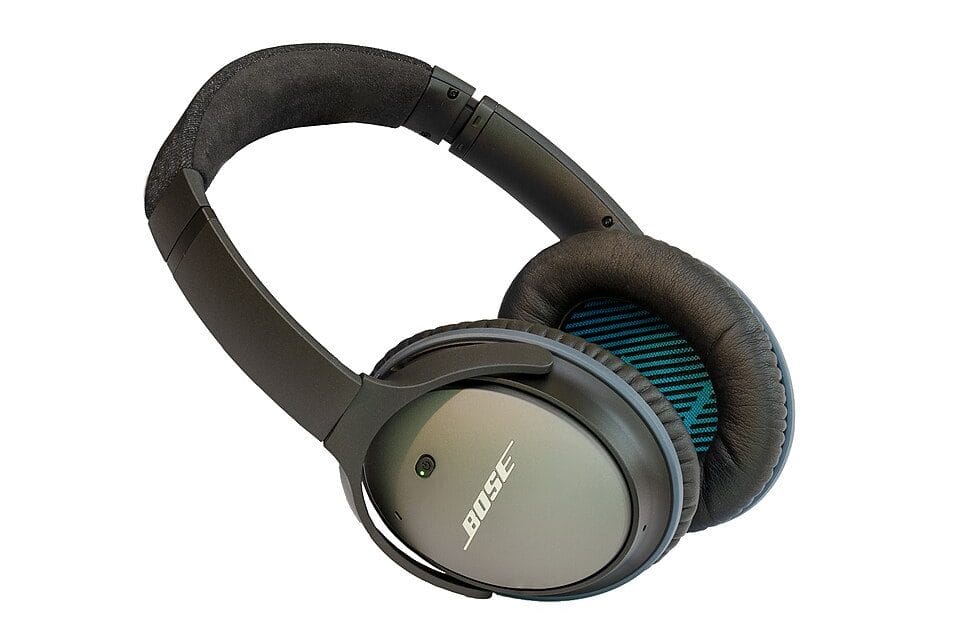
Your open-plan floor doesn't care that you're two minutes into a client call when someone in supply chain decides now is the moment to microwave salmon. The HVAC hums at a frequency that never quite disappears, no matter how many times facilities promises to fix it. Somewhere behind you, two people are having an entirely unnecessary conversation about a Slack channel that could have been a message. This is the environment two headphones are actually built for right now: the Sony WH-1000XM6 at $299 and the Bose QuietComfort Ultra Headphones at $549. Both promise to make that noise disappear. Only one of them is worth buying if you're not expensing it to a corporate card, and after three weeks of alternating between them on the same commute, the same desk, and the same Tuesday-afternoon conference calls, the case for spending $250 less isn't close.
What $549 Actually Buys You With Bose
Bose earned its reputation the hard way, and the QuietComfort Ultra Headphones show it the moment you put them on. The clamping force is close to perfect — tight enough to seal out noise, loose enough that you forget you're wearing anything by hour three. Bose's Immersive Audio mode, its version of spatial sound, genuinely changes how music sits around your head, and the app's CustomTune calibration adjusts the fit and the noise cancellation profile to your specific ears in about fifteen seconds. None of that is marketing fluff — you can feel the fifteen years Bose has spent refining this exact product category. The build quality feels like $549, from the aluminum-reinforced hinges to the case that actually protects the headphones instead of just holding them. Even the touch controls on the earcup, which Sony has never quite nailed across five generations, respond consistently on the first tap instead of the second or third.
Where the price tag stops making sense is battery life. Bose rates the QuietComfort Ultra at roughly 24 hours with noise cancellation on, dropping closer to 18 hours if you leave Immersive Audio running — and most men who buy these will leave it running, because turning off the one feature you paid extra for defeats the point of buying them. Compare that to a flagship phone that needs charging every night, and you've now got two devices competing for the same USB-C cable at 11 p.m.
The Sony Case, Made Plainly
Sony's WH-1000XM6 doesn't try to reinvent anything the XM5 already did well — it just tightens every bolt. Battery life lands around 30 hours with adaptive noise cancellation active, a genuine six-hour advantage over Bose that matters more than it sounds on a week where you forget to charge anything on Sunday night. The adaptive ANC uses onboard sensors to adjust cancellation strength based on your environment in real time, so it dials up automatically the moment a train pulls in or a conference room fills up, without you touching the app. Multipoint Bluetooth pairing connects to a laptop and a phone simultaneously, and switching between a Zoom call and a Spotify playlist happens without the three-second lag that used to plague Sony's earlier models.
Buy the Sony. For the overwhelming majority of men reading this at a desk between 9 and 6, the WH-1000XM6 does everything the job actually requires — real ANC, real comfort, real battery life — for $250 less than Bose is asking for its flagship.
Comfort for the Marathon Meeting Day
Comfort is the one category where I'd actually pay Bose's asking price if only that were the whole deal.
Bose's earcups use a slightly softer foam and a marginally wider clamp radius, which matters if you wear glasses — Sony's tighter fit can create a pressure point against the temple arms after four or five hours. Men with larger heads or thick-framed glasses should try both in person before deciding, because this is the one spec sheet genuinely can't capture. That said, Sony redesigned the headband padding on the XM6 specifically to address the fatigue complaints XM5 owners raised, and in practice the gap has narrowed to the point where it only matters on the longest days — the ones with back-to-back calls from 8 a.m. to 5 p.m., which, if you're honest, happen more often than you'd like to admit.
Noise Cancellation and Call Quality, Where It Actually Counts
Both headphones handle steady-state noise — HVAC hum, airplane cabin drone, the low roar of an open floor — essentially the same way: it disappears. The difference shows up on transient, unpredictable noise. A door slamming, a coworker's laugh, a chair scraping across tile. Bose's processing reacts a beat faster to those sudden spikes, and if your office runs loud and chaotic rather than steadily noisy, that's a real advantage worth naming honestly.
Call quality is the other place Bose pulls ahead. Its six-microphone array with Bose's own noise-rejection algorithm produces noticeably cleaner audio on the receiving end in a busy room — colleagues on the other end of a call stop asking "sorry, can you repeat that?" almost entirely. Sony's call quality on the XM6 is good, not great; it handles a quiet home office fine but struggles slightly more than Bose does when a nearby conversation gets loud mid-call. If your job is 80% video calls from an open floor, that's worth factoring in before you write off the extra $250 entirely.
The App, the Firmware, and the Stuff Nobody Mentions in a Spec Sheet
Sony's Headphones Connect app has quietly become the more useful of the two. It exposes a full ten-band EQ, lets you rename and save profiles for different environments — home, office, gym — and Sony has kept shipping meaningful firmware updates two and three years after launch, which is more than can be said for most electronics companies. Bose Music, by contrast, covers the basics cleanly but keeps the EQ locked to a simple bass/mid/treble slider, and updates tend to arrive less frequently once a model is past its first year on shelves. Neither app requires an account to use the core features, which matters more than it should given how many gadget companies now gate basic functionality behind a login screen.
Resale value tilts toward Sony as well. Because Sony refreshes this line roughly every two years and demand for used XM-series headphones stays consistently strong, a two-year-old WH-1000XM5 still fetches $150–$180 on the resale market. Bose's QuietComfort Ultra holds value reasonably well too, but the gap between what you paid and what you'll recoup is naturally smaller when the starting price is already $549.
Travel and the Daily Commute
If your workweek includes actual travel — flights, trains, a mixed home-and-office schedule — both headphones fold flat into a hard case that survives a backpack without complaint. Sony's case is marginally smaller. Bose includes a USB-C-to-USB-C cable and a 3.5mm cable for wired listening on planes without Bluetooth, a small but genuinely useful inclusion that Sony matches but doesn't improve on. Ambient/transparency mode is close to a toss-up: both let outside sound in cleanly enough to hear a gate announcement or a barista calling your name, though Bose's version sounds marginally more natural, less like a microphone feed and more like simply taking the headphones off for a second.
The Verdict for Most Men
Skip the Bose unless your company expenses it or your job genuinely runs on back-to-back client calls from a loud room. For everyone else — the guy commuting on the subway, working from a shared office three days a week, taking the occasional call from a coffee shop — the Sony WH-1000XM6 covers the real use case for $299 and leaves $250 in your pocket for the accessories that actually improve a desk setup: a decent webcam, a second monitor arm, a mechanical keyboard that doesn't sound like a typewriter in a silent room.
Buy Bose if call clarity in a loud room is a genuine professional requirement, not a nice-to-have. Buy Sony if you want the best all-around noise-cancelling headphones at the office for the money most men are actually willing to spend, and don't feel like you're settling — because on batteries, adaptive ANC, and day-to-day comfort, you're not.